
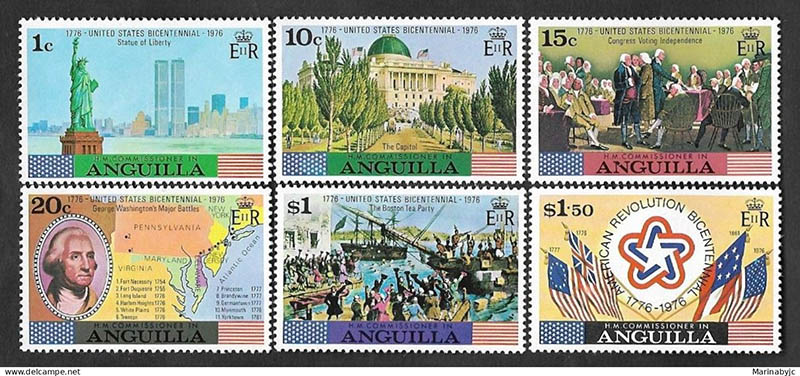
Other countries used to like us.
I don’t intend on celebrating the fourth of July this year. I was six years old during America’s Bicentennial. I don’t remember much of it and I was really looking forward to the 250th. I feel cheated because Americans have become so stupid they happily elect con men to all facets of government and gleefully clap as they watch these con men plunder America’s wealth reputation. We don’t have a functioning government. We have pedophiles and pedophile protectors enriching themselves as Americans are forgotten and drown in preventable issues.
This year, I’m going to remember an important document and some people who have been largely forgotten, but deserve recognition for the things they did to help create this once-promising nation.
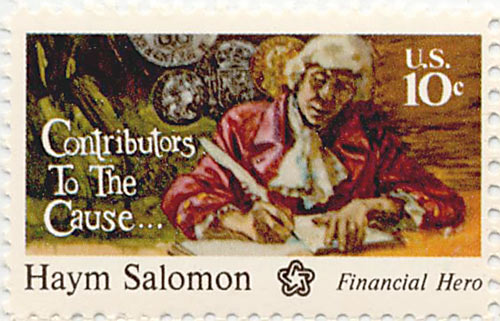
There are always money-men. Haym Salomon was born in Poland and studied finance before emigrating to New York City in 1775. He became one of the primary financiers of the Continental Congress. He assisted in converting French loans into hard cash, by selling bills of exchange as well as brokering large donations to the Cause. Those donations were instrumental in making the Yorktown campaign a victory for Washington. He helped to provide the Americans with more than $650,000 (a little over S15 million today) in donations.
Salomon donated his entire fortune to the Continental Army and several Founding Fathers (he paid their living expenses). He was one of the wealthiest men in the colony and died nearly bankrupt. We forget him because the people who fund revolutions are never remembered. He was also Jewish and fought for religious equality his entire life, but never got the recognition he deserved. America would not be a country without him. Yet, we never learn about him in school.
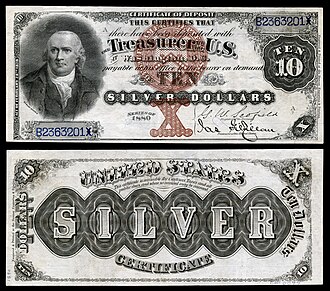
Robert Morris was highly involved in the American Revolution as well as the early years of America’s fledgling government. He and Salomon bankrolled the colonial military even though he didn’t think they would win. He was able to get a hold of the majority of supplies needed, from cows to guns. He signed most of the early government’s major documents. He also pushed for a national mint and to decimalize the currency. He was the first to use the dollar sign ($) to represent America’s currency. He declined the role of Secretary of the Treasury and suggested Alexander Hamilton while laying all the groundwork for Hamilton’s plans.
He was sidelined because he didn’t think the “right way.” H was regularly slandered by contemporaries who opposed him, thus he was shoved out of most history books.
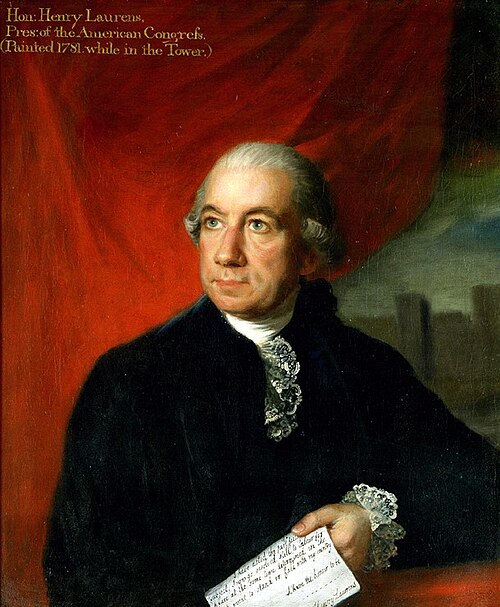
One of the richest men in the Colonies, Henry Laurens was a southern planter and co-owner of the largest slave brokerage in the western hemisphere. Gross, but I don’t shy away from the terrible parts of our history. Henry bankrupted himself funding the Revolution. He and his son, John, held massive influence in the South. John was also an early abolitionist who was killed in the Battle of the Combahee River in August 1782, against the British. We don’t learn about them in school because they are complicated men and, I guess it’s too hard to teach nuance and truth in school.
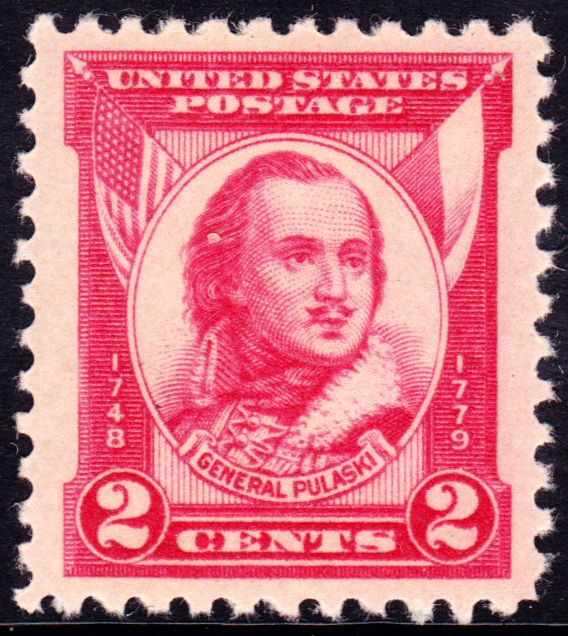
Pulaski Highway isn’t far from my hometown in New York. I’ve driven on it many times. There is also Pulaski Bridge, which connects Queens to Brooklyn. I’ve driven over it, too. I have also driven over Pulaski Skyway, a four-lane bridge and causeway in northern New Jersey. These are all named after Kazimierz Michał Władysław Wiktor Pułaski.
Pulaski has been called the Soldier of Liberty and the Father of the American Cavalry. He was a Polish nobleman and one of his country’s leading military commanders during the Polish-Lithuanian Commonwealth uprising. When it failed, he was exiled. Fortunately for us, he listened to old Ben Franklin and Silas Deane, and came to the U.S., to help with the Revolution.
Pulaski proved himself and brought order and modern training methods to the colonists. He did quit for a short while because he couldn’t speak English and commanding troops was made difficult because of the language barrier. However, he was convinced to come back and was instrumental to George Washington in the South.
During the Battle of Brandywine on September 11, 1777, British forces were on the verge of overwhelming the Continental Army. With Washington himself in danger, Pulaski charged into action: “With no time to argue, Washington entrusted Pulaski with his own mounted guard, about thirty in number, and watched as the Polish volunteer led his band directly into the fray, delaying the British long enough for the Continentals to retreat and possibly saving Washington’s life.”
His cavalry was feared and he helped to create what became America’s first effective cavalry. He died from wounds sustained during the Second Battle of Savannah on October 9, 1779. He had led an assault against the British to drive a wedge between their troops and gain an advantage. You can also learn about fellow Pole Tadeusz Kosciuszko, but he’s way more famous, I think, so I didn’t include him in my list.
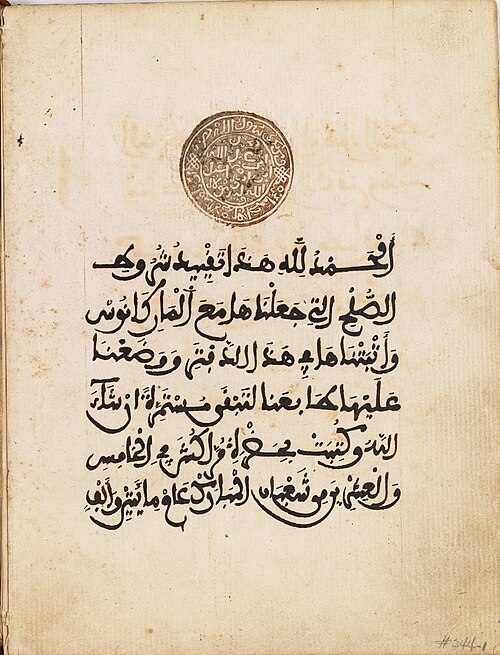
Moroccan–American Treaty of Friendship (Treaty of Marrakesh), 1786
The first country to recognize the United States at the time was the Republic of Ragusa (city of Dubrokvnik) in 1776. However, it lost its independence so it’s technically not true anymore. They also did not open any diplomatic relations with the U.S.
Morocco is the first nation to recognize America as a sovereign country. On December 20, 1777, the Sultan of Morocco, Sidi Mohammad ben Abdallah, commissioned a Dutch consul in the Moroccan port city of Salé to write letters to a variety of consuls in the country informing them that countries like the Russia, Prussia, and the newly-formed United States were to be permitted to enter Moroccan ports. The Americans had been docking in Tangier before the war.
Basically, the Sultan didn’t want to rely on his army for revenue. He was progressive for his time and thought if he could establish peaceful relations with other countries, he could establish trade as a more regular source of income.
Morocco wanted a formal treaty with the United States, but the times being what they were, chaotic at best, a treaty was began in 1783. The Moroccan-American Treaty of Friendship was formally signed 1786 in Europe by John Adams, Thomas Jefferson, and the Sultan. It was ratified by Congress soon after. The treaty is still in force today and is the longest-standing, unbroken treaty in U.S., history. This was also important because it stopped piracy between the two countries.
Pirates were quite ferocious along the Barbary Coast. They not only stole your cargo and your ship, they kidnapped Europeans. It was so bad at one point that the European countries were bribing African nations to get rid of the pirates. The Americans eventually built their own navy as they were sick of paying protection fees. This is a massive oversimplification, of course.
So this is all cool, but it still leaves out some other reasons I don’t celebrate the fourth. The founders were progressive in a lot of things. They wrote about this great thing called freedom. Except it wasn’t available to women and slaves. Progress on both issues were too slow in being resolved and has left an embedded misogyny and racism in the fabric of American society that I don’t think it will be fixed in my lifetime.
Our founders were flawed men. Until we reconcile it properly and change, we will continue to be ruled by these types ideologies and worse.
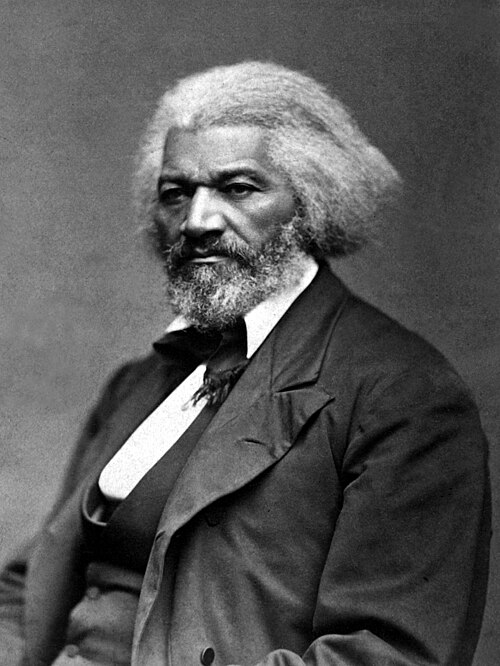
Another American we need to study more and learn from is Frederick Douglass. He is not as forgotten, but there are those today who would willingly erase Douglass from history.
I assert most unhesitatingly, that the religion of the south is a mere covering for the most horrid crimes,–a justifier of the most appalling barbarity,–a sanctifier of the most hateful frauds,–and a dark shelter under, which the darkest, foulest, grossest, and most infernal deeds of slaveholders find the strongest protection. Were I to be again reduced to the chains of slavery, next to that enslavement, I should regard being the slave of a religious master the greatest calamity that could befall me. For of all slaveholders with whom I have ever met, religious slaveholders are the worst. I have ever found them the meanest and basest, the most cruel and cowardly, of all others. It was my unhappy lot not only to belong to a religious slaveholder, but to live in a community of such religionists.
—Narrative of the Life of Frederick Douglass, an American Slave
Many refuse to admit it, but we still live among millions who would relish a return to these times – to the slaveholders with power and the women silenced in their homes while slaves are abused to the delight of those in charge.
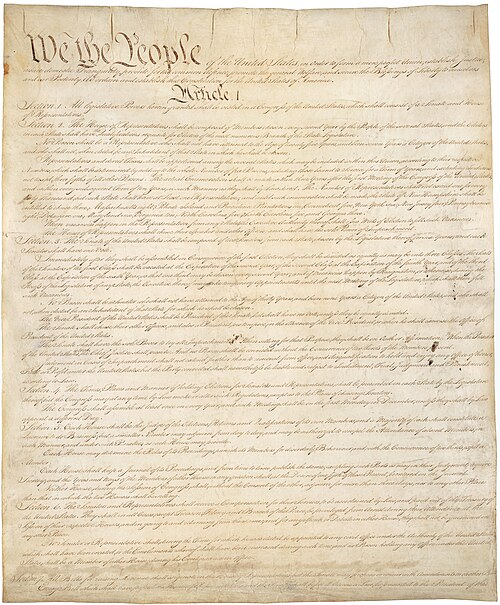
Page 1 of the handwritten US Constitution
One final note, as it’s not a forgotten person, but a document. James Madison is considered the “Father of the Constitution” because he drafted and promoted it. Before that, he helped defeat a bill in Virginia which would have taxed citizens so those taxes could be used to support “teachers of the Christian religion.”
The document you likely have no memory of is “Memorial and Remonstrance Against Religious Assessments.” Madison wrote this in 1785, warning everyone to not involve government in religion. It should be resisted because “it is proper to take alarm at the first experiment on our liberties” and “that matters of religion belong to the individual conscience and lie beyond the legitimate authority of government; that history demonstrates how the union of religion and political power breeds division, persecution, and violence; and that religion itself is corrupted when it becomes entangled with the ambitions and biases of those who wield political power.”
Madison was right then. He’s right now. He was also aware of Celsus, the Greek philosopher, who wrote how Christians were dangerous because they will place the advancement of their religion over the welfare of the state. He abhorred Christians who walled “themselves off and break away from the rest of mankind.”
If you think Madison wrote the defining document for the entire country and didn’t want separation of church and state, then you failed in your education. Do better.
It’s important to remember the people who helped us get our start, as well as the documents written to support the new country. Today, it seems the truth and the curiosity to learn is forgotten on this unseemly quest for greed and domination. I do not think I will celebrate another 4th again. I will, however, continue to read in a quest to understand humankind.
AJ
America’s Bicentennial was a complete and total Nationwide Celebration. The 250th has been vandalized/kidnapped by criminals. I (we) will not be celebrating in traditional fashion. This just is not an America I recognize.