
Here’s a roundup of the books I’ve read over the past two months. Two good. One meh. One crap.
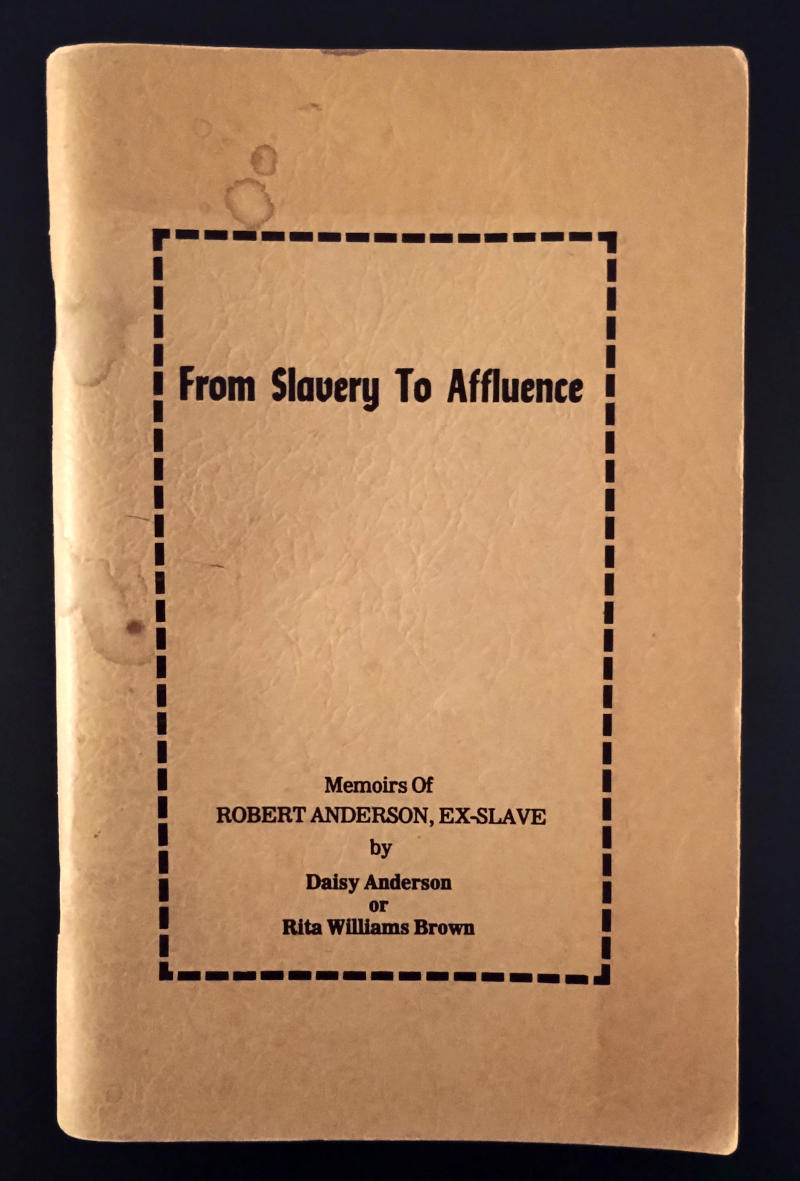
From Slavery to Affluence: Memoir of Robert Anderson, Ex-Slave
Robert Ball Anderson was born a slave in Kentucky, joined the Union Army during the U.S. Civil War, and then went on to become a landowner. He was the first black landowner in Nebraska. His second piece of land was in western Nebraska near Hemingford. He only ever learned to read and write a few words and sign his name, so he dictated his memoir to his wife, Daisy. She had been a schoolteacher before they married in 1922. He died tragically in a car accident eight years later, but his memoir is quite remarkable to me.
He was scammed a couple of times early on, but he persevered. He endured the usual racism of the time, but his memoir shows us the man who knew and understood how he was treated and chose to be positive instead of letting things eat at him. The memoir is about 70% his life as a slave.
He began his memoir as such:
“I once was in bondage, but now I am free.” I have never been much of a singer, but that old song rings in my heart today as I think back over the eventful years of the past, but with a meaning far different from what was in the mind of the hymn writer as he penned those lines. I once was in bondage, a slave in the old days preceding the Civil War, owned but owning nothing, valued in dollars and cents as any other chattel, to be bought and sold, traded or worked, even as a horse or cow, as the financial needs or desires of the owner dictated. But now I am a free man, a citizen of the United States, a property owner, and boss of my own ranch.
And he ended it like this:
I belong to the black race and am not ashamed of it. I have seen considerable trouble and hard times, but there was always a consolation in thinking that it was not as bad as it might have been. I have had some mighty good times, and have enjoyed life immensely. I have found that happiness and enjoyment is where we make it, and there is a heap of satisfaction in knowing that I did my best. I have worked hard with honest and earnest intent, and feel that my labors have been rewarded. I have always tried to be fair and honest in my dealings with others and have always tried to give an honest day’s work for an honest day’s pay. I have friends all over the United States, and cannot help but feel that every one in Box Butte County, and western Nebraska, regardless of color, is my friend, and I am proud of it. I always try to attend to my own business and never interfere with anyone else. After all is said and done, I find that there is no greater rule for making and holding friends, for happiness and contentment and real enjoyment of life, than in doing unto others as I would like them to do unto me, and try to do it just a little bit better.
This is one of the better books I’ve read and I didn’t expect it to have as big of an impact on me as it did. It took me over a year to find it. People who own a copy chuck it up on Amazon for $100-150, which is ridiculous for a 90-page book. I got lucky and found a copy about a year ago for around $35. Still expensive, but it’s the 1986 edition and was signed by Daisy. It was a lot to pay for a 90-page memoir, but it’s been money well-spent. I’m probably going to read it again and I truly wish it was more available or as an audio book so more people can read it.
All of the books listed below are based off their audio book versions.
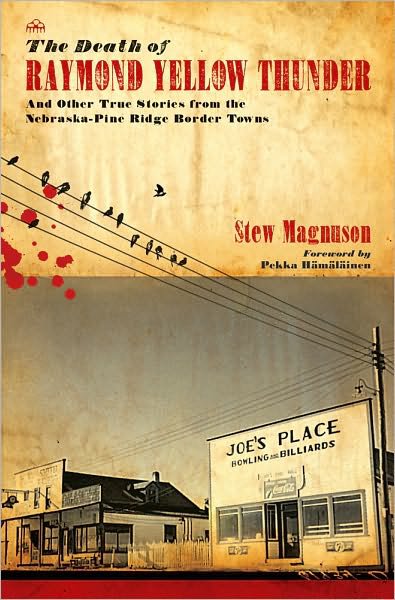
The Death of Raymond Yellow Thunder: And Other True Stories from the Nebraska–Pine Ridge Border Towns by Stew Magnuson (Author) and Pekka Hämäläinen (Foreword).
After trudging through the two books below, this book was a breath of fresh air. I listen to audiobooks mostly in my car and I found myself sitting in a parking lot or in my garage wanting to continue the book instead of whatever I got in my car to do.
Author Stew Magnuson lived in Gordon for four months while researching the case. This book takes a massive deep dive into the complexities surrounding between the Lakota and the white people in the border towns of Nebraska and the Pine Ridge Reservation in South Dakota. It delves far back into the history of how the border towns began, which is all part of the story leading up to Yellow Thunder’s death. It is a complex story, but if you have the patience, you will be rewarded by an author who enlightens you while presenting a balanced account of all that happened. This is one of the best books I’ve ever read.
Pekka Hämäläinen writes in the forward:
The long-intertwined communities of the Oglala Lakota Pine Ridge Reservation and the bordering towns in Sheridan County, Nebraska, mark their histories in sensational incidents and quiet human connections, many recorded in detail here for the first time. After covering racial unrest in the remote northwest corner of his home state of Nebraska in 1999, journalist Stew Magnuson returned four years later to consider the larger questions of its peoples, their paths, and the forces that separate them.
Examining Raymond Yellow Thunder’s death at the hands of four white men in 1972, Magnuson looks deep into the past that gave rise to the tragedy. Situating long-ranging repercussions within 130 years of context, he also recounts the largely forgotten struggles of American Indian Movement activist Bob Yellow Bird and tells the story of Whiteclay, Nebraska, the controversial border hamlet that continues to sell millions of cans of beer per year to the “dry” reservation. Within this microcosm of cultural conflict, Magnuson explores the odds against community’s power to transcend misunderstanding, alcoholism, prejudice, and violence.
“Like all good stories, The Death of Raymond Yellow Thunder spins against the way it drives. Even as the people of Sheridan County despise, scorn, exploit, assault, and kill one another, their lives, like objects slipping out of control, become more and more inseparable. Indians and whites coexist and, against all odds, somehow get along, sharing space they really don’t want to share. This countercurrent is the source of the many unexpected stories Magnuson brings forth.”
For anyone not from Nebraska or who do not know the story of Whiteclay and its liquor sales, this book was written in 2008. On April 19, 2017, the Nebraska Liquor Control Commission voted unanimously to deny the renewal of all four beer licenses in Whiteclay. Two of the four are now a church and an artist makerspace. There is a book “Whiteclay: An American Tragedy,” which has just come out detailing the events there.
You can read about it at the Nebraska Examiner. Yes, I’m going to pick up a copy as soon as funds allow me to do so.
The only thing that pissed me off while listening to the book was the narrator’s constant mispronouncing of Mari Sandoz’s name. I almost immediately hit the pause button each time and yelled, “NO. No. No, that’s not how you say her name.” Then, I calmed down and got back to listening.
I want to go back and read the book. I just need to save some money to do so. Either way, it’s a story I highly recommend.

Red Cloud’s War: The History and Legacy of the Only 19th Century War Won by Native Americans against the United States
It felt to me that the narrator was reading the book as fast as he could so he could go pee, or something. It was really distracting the entire time. It might have been AI. I don’t know. It claims it isn’t, but, man, listening to this book sucked.
I also didn’t learn anything new. This might be because I’ve read too much on the topic or because the narrator was so distracting I found my mind wandering a lot. Read the book. Then you can skip the bits you know and enjoy it more.
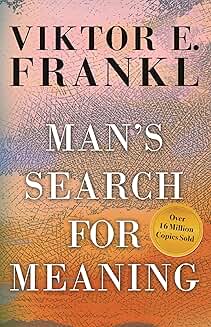
Man’s Search for Meaning by Viktor Frankl
“Man’s Search for Meaning” is a 1946 book by Viktor Frankl, chronicling the author’s experiences as a prisoner in Nazi concentration camps and introduces his psychotherapeutic method called logotherapy, which emphasizes finding purpose in life. The book explores how a sense of meaning can help individuals endure suffering and challenges.
I can’t count the number of times I’ve been recommended Viktor Frankl’s “Man’s Search for Meaning.” I was told the book was “freaking awesome.” I finally read it. The book was crap.
As a matter of fact, I found it so bad that I had downloaded a bunch of scientific papers to point out why it was a useless book, but I ended up deleting it all because I don’t want to waste another moment of my life on this supposed great work.
I will say, I enjoyed the first part of the book where readers learn about how he survived the concentration camp. It was insightful and made me think about how man reacts when put into perilous conditions. He pointed out how the people in the camps who found meaning, even in those horrific circumstances, were more resilient to suffering than those who did now. He wrote, “ Everything can be taken from a man but one thing…the last of the human freedoms — to choose one’s attitude in any given set of circumstances, to choose one’s own way.”
Frankl uses this as his stepping stone to what meaning is and his creation of logotherapy. For me, it came off as “surface-y” and didn’t provide me with anything useful. It’s kind of like Marcus Aurelius’ “Meditations.” It might be helpful to some people, but it came off as dismissive to people like me with complex PTSD. Both books have similar attitudes of “welp, we can’t change it so let’s accept it and move on.” I get the point Frankl was trying to make. It just doesn’t work that way with PTSD and I can understand how people find something good to take from the book. It just didn’t do anything for me.
With each chapter I felt like I wasn’t understanding what was being written and that it would eventually all click. I forced myself to keep reading because this is supposed to be one of the top 10 influential books of the 20th century in America. I usually stop reading when a book doesn’t do anything for me, but I kept thinking “okay, maybe the next part will be better.”
It never got better. I looked for some scientific papers and reviews over the years about the book. I felt like I had to be missing something. I’m not. I just don’t like the book.
I’ll review a few more just as soon as I’m finished reading them.